
What crowns and bridges do
A dental crown is a cap that fits over a tooth that still has its root but can no longer function properly on its own. A bridge spans a gap left by a missing tooth, anchoring to the teeth on either side. Both are fixed restorations - they are cemented in place and not removed for cleaning.
Crowns and bridges serve different purposes. A crown protects and restores a tooth. A bridge replaces one. But they use the same materials, the same laboratory process, and a broadly similar clinical approach - which is why they are usually discussed together.

When a crown is the right choice
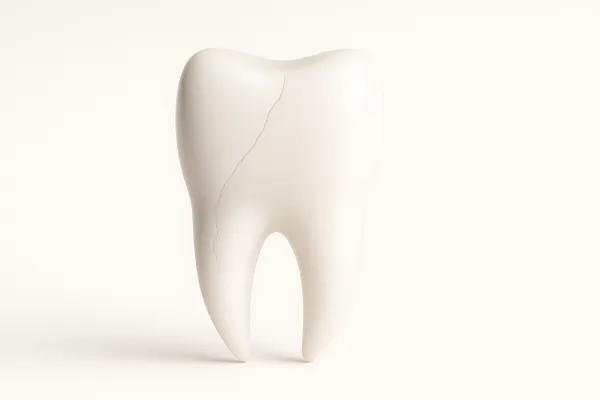
A tooth typically needs a crown when it has lost so much structure that a filling is no longer sufficient to hold it together. This happens after a large cavity, a crack that extends through the tooth, or a root canal treatment that leaves the tooth brittle. The crown encircles the remaining tooth and takes the biting force, preventing the tooth from fracturing further.
Crowns are also used to improve the appearance of a tooth that is badly discoloured, misshapen, or significantly smaller than its neighbours - particularly when there is not enough enamel for a veneer to bond to reliably. In these cases the restoration is both functional and cosmetic.
- Tooth weakened after root canal treatment
- Large crack or fracture extending into the tooth structure
- Decay too extensive for a filling to hold
- Badly worn or eroded tooth needing rebuilding
- Poor aesthetics where veneers are not suitable
When a bridge is the right choice
A bridge is worth considering when you have a missing tooth with healthy, strong teeth on both sides of the gap. The teeth adjacent to the gap are prepared and crowned, and a false tooth - called a pontic - is suspended between them. The result is fixed, stable, and looks natural.
Bridges are faster than implants and do not require surgery. They suit patients who want a fixed solution but are not suitable for implants, are not ready for the implant process, or whose gap is in a position where a bridge is the more practical option. The limitation is that the adjacent teeth are permanently altered by the preparation, and the bridge relies on those teeth remaining healthy over time.
The treatment process at Kelvinbridge
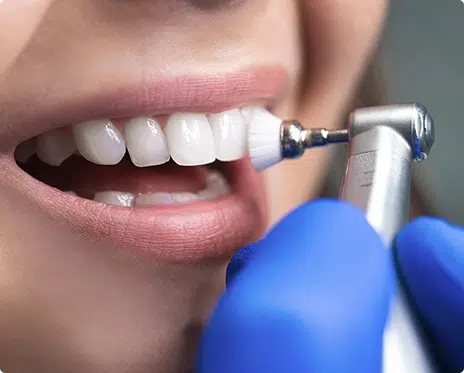
Crown and bridge treatment typically involves two main appointments, with a laboratory stage in between. At the first appointment, we prepare the tooth or teeth - reducing them in size to create space for the restoration - take impressions or digital scans, and place a temporary crown or bridge. The temporary restores function and appearance while the permanent restoration is being made.
At the second appointment, we remove the temporary, check the fit of the permanent restoration, make any adjustments needed, and cement it permanently. We check your bite carefully to make sure the new restoration works in harmony with the rest of your teeth.
We use tooth-coloured ceramic materials for front teeth and the upper premolars. For back teeth taking the most biting force, we discuss material options with you - ceramic, ceramic-fused-to-metal, or full metal depending on your situation.
Crowns and bridges versus implants
For a missing tooth, the alternative to a bridge is a dental implant. An implant replaces the root as well as the visible tooth, does not involve preparing the adjacent teeth, and is generally considered the longer-term solution. The process takes several months and involves minor surgery.
A bridge can be completed in a few weeks. If the adjacent teeth already need crowns for other reasons, a bridge may be the more efficient route anyway - you solve multiple problems in one treatment. If the adjacent teeth are untouched and healthy, an implant preserves them and is usually the better long-term investment. We discuss both options honestly at your West End consultation and help you decide based on your specific teeth, not a generic preference.