What professional whitening can achieve
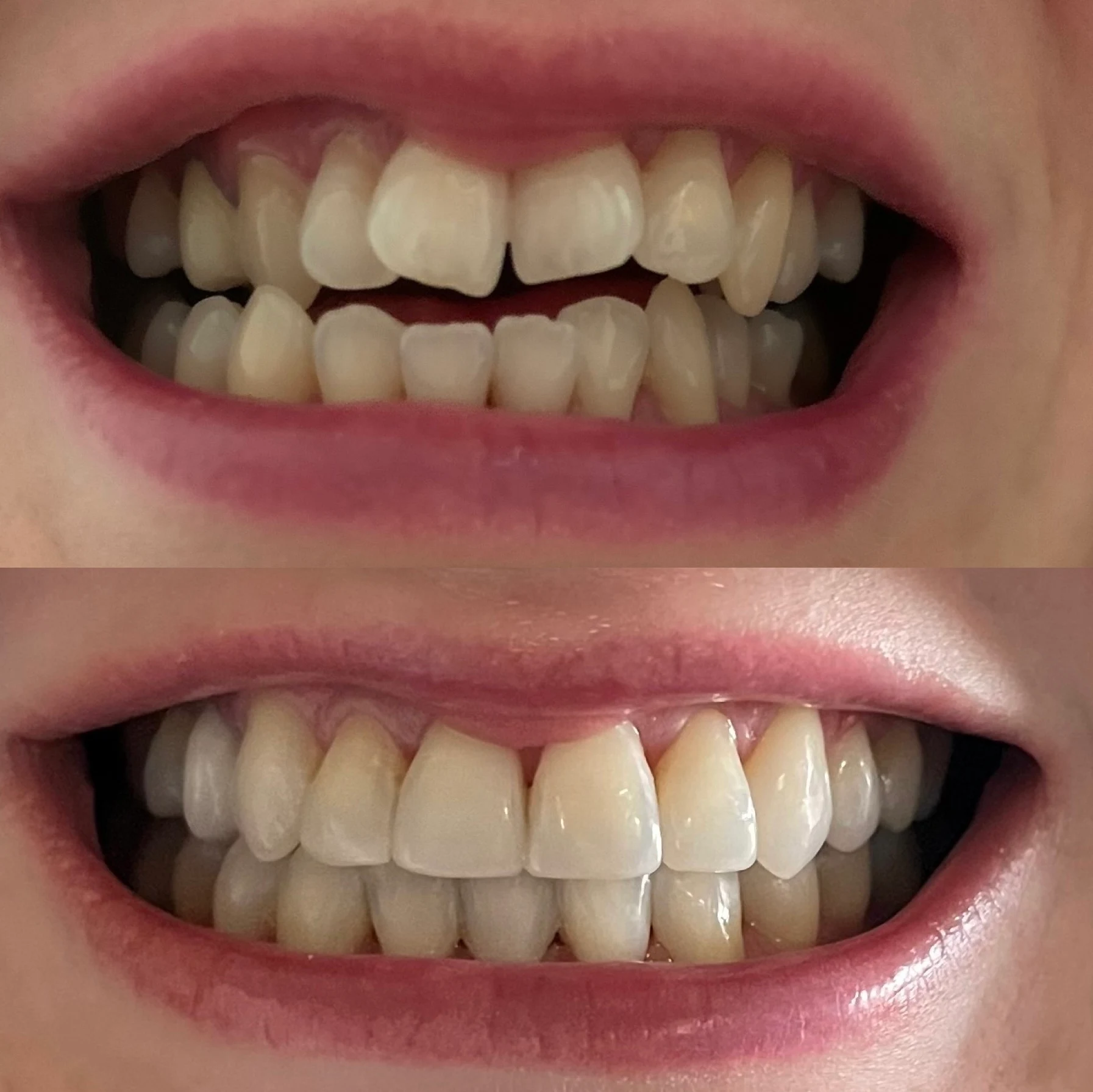
Professional teeth whitening lightens the natural colour of your enamel using a peroxide-based gel. It does not produce a uniform, artificial white - it removes the accumulated staining that sits within the tooth structure and brings your teeth back to a lighter, more natural shade.
Most patients see teeth that are several shades lighter after a full course of treatment. The improvement depends on your starting shade and the cause of the discolouration. Staining from tea, coffee, and red wine responds well. The yellowing that comes with age responds well. Greyness from certain medications or trauma to a tooth is more resistant and may not respond to whitening at all.
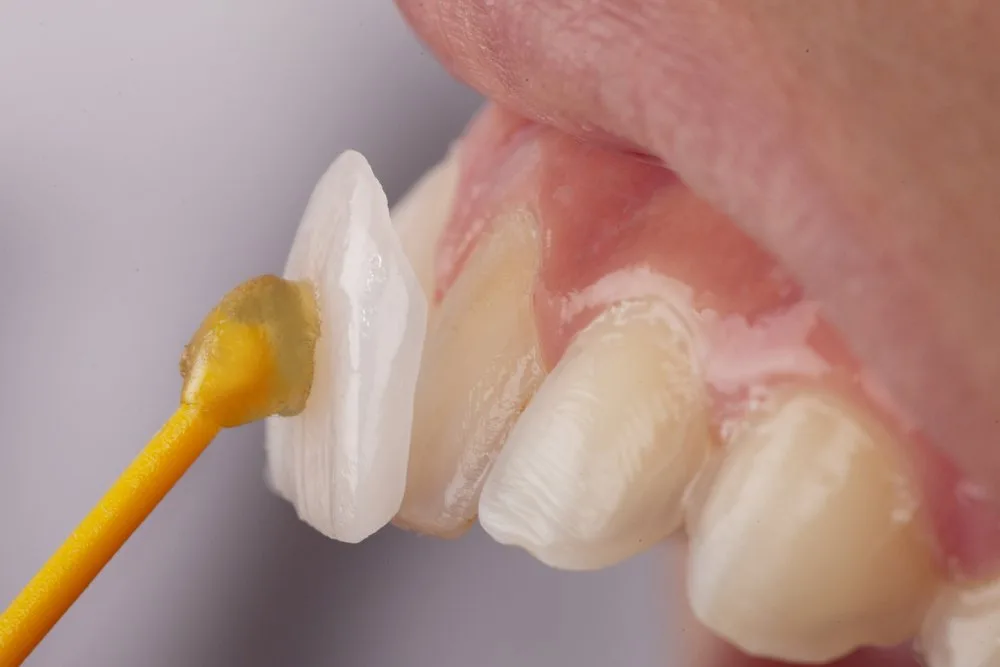
One thing to be clear about: whitening works only on natural tooth enamel. It does not change the colour of crowns, veneers, composite bonding, or white fillings. If you have visible dental work on your front teeth, we factor this into the plan.
Is whitening right for you?
Most adults with healthy teeth and gums are suitable candidates. Before we prescribe whitening, we check that your gums are in good health, that there are no untreated cavities, and that there are no signs of enamel erosion that would make your teeth more sensitive during treatment. Whitening before any necessary dental work is not something we recommend.
Whitening is not suitable during pregnancy, and we do not treat patients under eighteen. If you have significant sensitivity already, we can often still whiten but take a more gradual approach using lower-concentration gel over a longer period. Some sensitivity during and shortly after treatment is normal for most patients and settles once treatment is complete.
Whitening is one of the most cost-effective cosmetic treatments available. If you are unhappy with the colour of your teeth and they are otherwise healthy, it is nearly always worth trying before considering more involved options.

How the process works at Kelvinbridge
We use a take-home whitening system. At your appointment, we take impressions of your teeth and have custom-fitted trays made that fit precisely over your upper and lower teeth. Precise fitting is important because it stops the gel from leaking onto the gums, which can cause irritation.
We provide the gel and full instructions. Most patients wear the trays for one to two hours per day, or overnight if sensitivity allows. A typical course runs for two to three weeks, though you may see significant improvement sooner. You keep the trays after treatment and can use them for top-up whitening when the shade begins to fade.
The trays and gel are collected at our West End clinic in Kelvinbridge. The whole process involves just two short appointments - one to take impressions, one to collect the trays and gel and go through how to use them.
Whiten before bonding or veneers
If you are planning to have composite bonding or porcelain veneers at our West End clinic, whitening should come first. The reason is straightforward: once composite or porcelain is placed, its colour is fixed. If you whiten afterwards, your natural teeth lighten but the dental work does not, and you end up with a mismatch.
We routinely sequence treatment in this order: whiten first, allow the shade to stabilise for a week or two, then proceed with bonding or veneers matched to the new shade. This gives you the best possible result from each treatment. At your consultation we plan the sequence clearly so you know exactly what happens when.